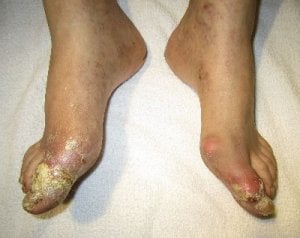
Gout symptoms are often thought to be just a swollen big toe.
Though gout causes swollen joints, it has other symptoms.
Unfortunately, many symptoms are similar to other diseases. So you need a full understanding of the causes of your gout. Then you can confirm your gout diagnosis.
My own gouty story started with a delayed gout diagnosis. Because my painful swelling started in my ankle. So, the doctor “thought it might be gout, but it isn’t in your toe!”
After my gout was confirmed by joint fluid analysis in a hospital, I became fascinated with gout. Because my research told me:
- Gout has many causes.
- Each sufferer has different signs of gout.
- People often confuse gout symptoms with other diseases
- Occasionally, doctors find it difficult to diagnose gout.
Gout Symptoms, Causes, & Diagnosis
All that research, which I still continue to do, has generated a lot of information related to diagnosing gout. So to make it easier to find I have divided it into subsections:
Correct diagnosis of gout symptoms is the vital first stage of controlling gout. There is a lot of information here about different symptoms, including explanations of why some doctors fail to spot important signs.
Before you start, consider reading What Is Gout. Because that will give you a basic understanding of the nature of gout. Then you can build on that foundation with following the facts about gout symptoms, causes, & diagnosis.
Gout Causes
Before we look at gout symptoms, you need to learn about gout causes. That way, you will understand the symptoms of gout better, and you will be better placed to end your gout misery.
- Gout Causes
- This simple overview of gout causes helps you understand the basics of why gout happens – your first step in learning how to fix it. It also teaches you why much of what you read about gout is just plain wrong!
- What Causes Gout?
- We know that excess uric acid causes gout. But what causes excess uric acid? There are so many factors that there can never be a simple explanation – every gout sufferer is different.
- Knowing the causes of gout helps you overcome it
- All causes of gout relate to uric acid. Understand what is happening and you are better placed to overcome the pain of gout and reduce the chance of repeat attacks.
- Causes Of Gouty Arthritis
- Many causes of gouty arthritis cannot be cured, and so we use gout medications to overcome them. If high uric acid is caused by medicine for another condition, there might be a different medicine that will work effectively without causing gout. In these pages, I cover medicines as causes of gouty arthritis, including:
- Diuretics Cause Gout – Statistical evidence showing an association between gout and diuretics (water pills) prescribed for high blood pressure, heart disease, and other conditions.
- Gout Causes Report
- How many types of gout causes exist? Uric acid under-excreters and over-producers make two. This basic approach to gout just changed. See three causes of gout.
Signs & Symptoms of Gout
Having looked at gout causes, you are ready to learn about gout symptoms. Once you understand the symptoms of gout, you will find it much easier to work with your doctor, and get the proper diagnosis that many gout patients miss out on.
- Symptoms Of Gout
- Many people, including some doctors, do not understand how or why symptoms of gout vary so widely. Often, gout is overlooked simply because the gout patients symptoms do not include a red, painfully swollen big toe. See the results of GoutPal’s extensive gout symptoms survey to see why that is wrong.
- Swollen Joints
- See how any joint can become swollen with gout. Learn why some joints get gout more often, but also understand that untreated gout will spread to every joint.
- Tophaceous Gout
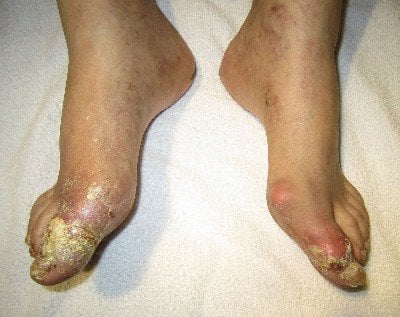
- Gout affects more than joints. Skin and most other tissues soon become inflamed with uric acid deposits known as tophi. Once gout reaches this tophaceous stage, your diagnosis becomes easy, and early treatment is vital. The easiest way to understand what tophaceous gout is, is to look at some tophi pictures.
- Test For Gout
- You need to test your gout symptoms to get a diagnosis, and later tests will help your gout treatment plan. But what test for gout is best?
Gout Diagnosis
Once you understand gout causes and symptoms, you will have a much better chance of working with your doctor to get an accurate diagnosis. Always remember that gout can get confused with other forms of arthritis, and many gout patients suffer more than one form – especially as untreated gout is bound to lead to osteoarthritis as joints become permanently damaged.
- Gout Diagnosis
- What procedures will help diagnose gout correctly. When should they be used, and when are they unnecessary?
- Types Of Arthritis
- What other forms of arthritis get confused with gout and can you suffer from more than one type?
- Rheumatology
- Why is rheumatology important to getting the right diagnosis, and when do you need to consult a rheumatologist?
- Find A Rheumatologist
- If you do need to consult a rheumatologist, where will you find one?
There are also other gout articles that refer to gout diagnosis. These are not complete enough to be included in this Gout Symptoms Reference section but you can still learn a lot from the Gout Diagnosis articles
Your Gout Symptoms: Next Steps
Now that you can see that gout symptoms are very wide-ranging and the many causes of gout can make gout diagnosis difficult.
You really need to read all the pages in this section to be certain that you have gout. However, if you have had a confirmed gout diagnosis from your doctor, then the best next step is to study the Gout Treatment Section.
If you really do not understand your symptoms, or if you are confused by your doctor’s diagnosis, you can always ask in the Gout Support Forum.
Never miss new pages about gout symptoms, causes, & diagnosis. Because all you need is a free subscription to my update service:
Leave Gout Symptoms to browse the Gout Home Page.
Gout Symptoms Related Topics
Please remember: to find more related pages that are relevant to you, use the search box near the top of every page.
Common Terms: Most Helpful Gout Pages, symptom
Other posts that include these terms:
- High Alkaline Foods for Gout Diet Menu
- Gout Foods Table for Vegetables
- Gout Food List for GoutPal Foodies
- Foods High in Uric Acid Chart
- Purine Rich Foods
- Does Alcohol Affect Gout?
- Colchicine For Gout
Please give your feedback
Did this page help you? If yes, please consider a small donation. Your donations help keep GoutPal's gout support services free for everyone.
If not, please tell me how I can improve it to help you more.
- YouTube
- The gout forums.