I originally published this article about alkaline foods and gout well before I realized the full value of an alkaline diet for gout. Since then, more evidence has been discovered by various gout studies to show that alkaline foods can encourage excretion of uric acid.
I have since developed a complete section of my gout diet guidelines to explain the value of an alkalizing gout diet menu. However, this early work is still relevant. So I retained it to explain the value of alkaline foods on uric acid kidney stones, which cause kidney damage to some gout sufferers.
Alkaline foods raise more controversy than they are worth.
People swear they are the holy grail of health – a magic cure for gout and every other health problem in the world.
Skeptics swear back: “You’re wasting your *#@!$&! time.
It’s time for us to see the real truth behind alkaline diet and gouty arthritis.
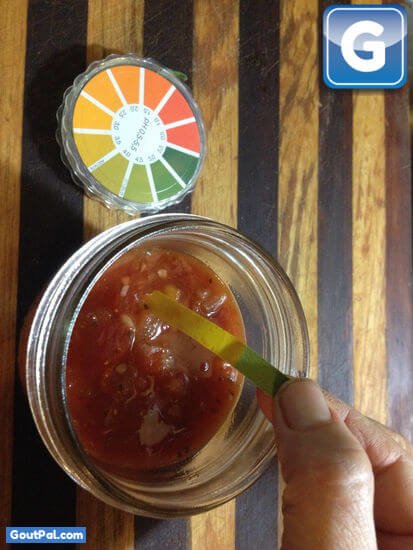
Myth 1: Alkaline Foods Turn Red Litmus Blue
Despite my best efforts to explain otherwise, people still believe that you can measure the power of alkaline foods by testing their pH. There are even lists of alkaline foods touted around the Internet that show the pH value for common foods. But these have nothing to do with the alkalizing effect, so why do they exist?
They stem from a US government table of pH values produced for the canning industry. Now, physical pH values might help food canners and packagers. Because they determine what balancing agents they need to avoid food reacting with its container. But these values have absolutely nothing to do with the effect of food on our bodies.
The science of alkaline foods recognizes that elements and compounds in food cause different reactions in our body when digested. Some elements, e.g. proteins and phosphorous produce acidic salts. Other elements, e.g. potassium, magnesium, and calcium, produce alkaline salts. These salts end up at our kidneys, where they alter the pH environment. This process has resulted in the Potential Renal Acid Load (PRAL) calculation, which is an approximate estimate of the effect of foods on the acidity/alkalinity of our bodies. Or more specifically, of urine, as this is the measurable result.
Still, people remain confused as to how an acidic food item, like lemons or vinegar, can have an alkalizing effect on urine and the kidneys. This happens because the acids in food are very weak. E.g. citric acid in lemons and acetic acid in vinegar. The alkalizing components in the fruits do not register on a pH test or our taste buds. Because that changes as we digest the food. When the alkalizing components combine with acid compounds in our bodies. Thus reducing the acid load at the kidneys.
So the only reliable way to test the value of alkaline foods is to measure the pH of urine. But beware of the obsession that leads to the second myth.
Myth 2: I Must Max Alkaline Foods For Best Health
Those who understand the previous myth about the pH of food, easily fall foul of the second myth. Persuaded as they are that alkalizing foods have a positive health benefit, they plan their gout diet solely from alkalizing food lists, avoiding anything that might have an acidifying effect.
This is wrong.
The compounds that we excrete in urine are a complex mixture of acid and alkaline salts. So that mix is the end product of various aspects of our metabolism. But typical Western diets commonly produce acid urine. Now, this is increasingly seen as a general health risk. With a specific risk for gout sufferers, as we will soon see. But it is wrong to dismiss all acid foods as bad, and all alkaline foods as good.
Because we need to balance acidizing and alkalizing foods. Which ensures we get a sufficient range of nutrients. With the overall balance being alkaline.
Myth 3: Alkaline Foods Neutralize Uric Acid
Uric acid is a very weak acid and causes no discomfort as a liquid component of blood. However, as it’s concentration increases, it will form crystals. Then crystals are attacked by the immune system. Similar to how we attack viruses and other foreign matter that enters our bodies.
The alkalizing effect of food has little or no influence on this process. Though uric acid crystals are more soluble in alkaline conditions, an alkaline diet does not change the pH of blood, or at least not in any significant way.
The specific benefit of alkaline food for gouty arthritis sufferers is that alkalizing urine significantly reduces the risk of uric acid stones forming in the kidneys, bladder and associated tubes.
Alkaline Foods and Gout Summary
In the 10 years since I first published these notes about alkaline foods and gout, lots of things have changed. Most importantly, research has advanced to tell us more about some effects of alkaline foods on uric acid. Also, we have more specific research on how individual food items affect gout dieters.
From my point of view, I’ve changed this website from just personal research notes. Because my purpose of GoutPal.com is now to help other gout sufferers work with their doctors to fulfill a safe and effective treatment plan.
So now I’m developing practical plans for different types of gout sufferers. This means that I will incorporate alkaline foods into those plans for GoutPal Dieters and GoutPal Foodies. Then I’ll change this article to incorporate those practical ideas. Including links to research studies that you can discuss with your professional advisers.
Alkaline Foods and Your Gout
We now have evidence to show that alkalizing urine promotes uric acid excretion. Though there is still much work required to explain how this works.
For now, it is best to discuss alkalizing foods with your doctor. Especially if your 24-hour urine test shows you to be a uric acid underexcreter. But if you’re not sure how to ask, GoutPal can help you. So share your concerns in the gout forum. Or in the Feedback Form below.
Leave Alkaline Foods and Gout to browse my Gout Diet Menu Guidelines.
Alkaline Foods and Gout Comments
GoutPal visitor responses and associated research include:
Uric Acid and pH Values
Filimon wrote…
I read that
“Gout is also affected by the overall acidity or alkalinity of the body. The food that you eat will affect the pH of your body. Increasing the pH level will increase the amount of uric acid that can be dissolved in the blood.”
Does it mean that alkalizing will increase uric acid in blood? I’m really confused about pH values.
I asked where that text had come from. So that I could try to explain the quote in context. In the meantime I added some general pointers. But note these are simplified explanations of factors that affect gout and uric acid. Because a complete explanation of “body pH” is beyond the scope of GoutPal.
“pH of your body” is too vague to be meaningful for gout management. Some people talk about the pH of blood. But unless you are dangerously ill, the pH of blood does not change. Instead, our kidneys regulate the pH of urine to maintain steady pH of the blood. So if the pH of urine is raised (more alkaline), uric acid is more soluble. This has the potential effects of:
- Dissolving kidney stones.
- Increasing uric acid excretion rate.
In practice, you must consult your doctor to confirm either or both of these effects. At the same time, you should ask for a blood uric acid test. So you have a useful combination of excretion rate and blood concentration of uric acid. That gives you and your doctor valuable information for effective uric acid treatment.
Alkaline Foods and Gout Related Topics
Common Terms: alkaline, Gout Myths, Most Helpful Gout Pages
Other posts that include these terms:
- High Alkaline Foods for Gout Diet Menu
- Gout Foods Table for Vegetables
- Gout Food List for GoutPal Foodies
- Foods High in Uric Acid Chart
- Purine Rich Foods
- Does Alcohol Affect Gout?
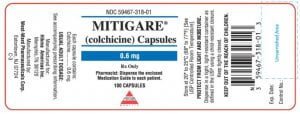
- Colchicine For Gout
Alkaline Foods and Gout Document Change History
 To read the document change history, click the History image on the right.
Do you have suggestions for improving Alkaline Foods and Gout? Then, please send your idea using the Feedback Form below.
Please give your feedback
Did this page help you? If yes, please consider a small donation. Your donations help keep GoutPal's gout support services free for everyone.
If not, please tell me how I can improve it to help you more.
- YouTube
- The gout forums.